REAL ID: What it is and why it plays a crucial role for travelers within the United States
Traveling within the United States requires more than just a standard driver’s license or ID card. Since 2025, the REAL ID Act significantly changes how travelers identify themselves when flying domestically or entering certain Federal facilities. This blog article explains what REAL ID is, why it was introduced, who needs it, and if there are alternatives to this new standard available.

What is REAL ID and why does it matter?
In response to the terrorist attacks of September 11, 2001, the U.S. government established the 9/11 commission to investigate the events and recommend measures to help prevent future attacks. One of the Commission´s key recommendations was to set up uniform standards for the issuance of identification documents, such as driver’s licenses and identification cards.
As a result, the U.S. Congress passed the REAL ID Act in 2005. The law establishes federal minimum security standards for state-issued driver’s licenses and ID cards. It also prohibits federal agencies from accepting driver´s licenses and identification cards that do not meet these standards for certain official purposes.
Under the REAL ID Act and its implementing regulations, states and territories must verify an applicant’s identity and legal status more rigorously. This includes taking a photograph of the applicant, digitally storing copies of submitted identity documents and verifying these documents directly with the issuing authorities. The goal is to make identification documents more secure and harder to counterfeit, thereby enhancing national security.
Since May 7, 2025, anyone 18 years and older needs to present a REAL ID‑compliant document or another acceptable form of identification to board domestic flights within the United States or to visit certain Federal facilities.
What are the requirements for getting a REAL ID-compliant document?
REAL ID-compliant IDs and driver´s licenses are issued by all states, the District of Columbia and the five territories. Although the REAL ID Act sets federal standards, the application process and required documents depend on the respective state.
To apply for a REAL ID, US citizens must register with their regional driver's license office (DMV).
In most cases, your state's driver's licensing agency will require proof of the following:
1. Identity (one document): Acceptable options include a U.S. birth certificate, U.S. passport, or Permanent Resident Card (Green Card) for non-U.S. citizens.
2. Social Security Number: You can provide your Social Security card, a Form W-2, or a pay stub/paycheck from your employer.
3. Proof of State Residency (usually two documents): Your DMV may ask for a deed, mortgage statement, lease agreement, utility bill, or bank statement to prove you are a state resident.
4. Proof of Lawful Status: You must provide proof of U.S. citizenship or legal presence, and documents are verified with the issuing agency. This verification process may take more than one day.
Foreign nationals holding certain U.S. visas may also be eligible to apply for a REAL ID‑compliant driver’s license. In some cases, additional documentation related to immigration status or length of stay may be required.
To ensure the authenticity and accuracy of the submitted documents, authorities increasingly rely on secure digital verification methods. ID document scanners, such as the DESKO PENTA Scanner® 4X or the DESKO ID 1-GO® play an important role in this process by capturing high‑resolution images of identity documents, securely reading document data, and supporting consistency checks against official standards. By enabling fast and reliable document capture and verification, such solutions help reduce manual errors, improve efficiency at DMV offices, and support the overall security objectives of the REAL ID Act.
Look for the star:
How can you tell whether your driver´s licence or ID document is REAL ID-compliant?
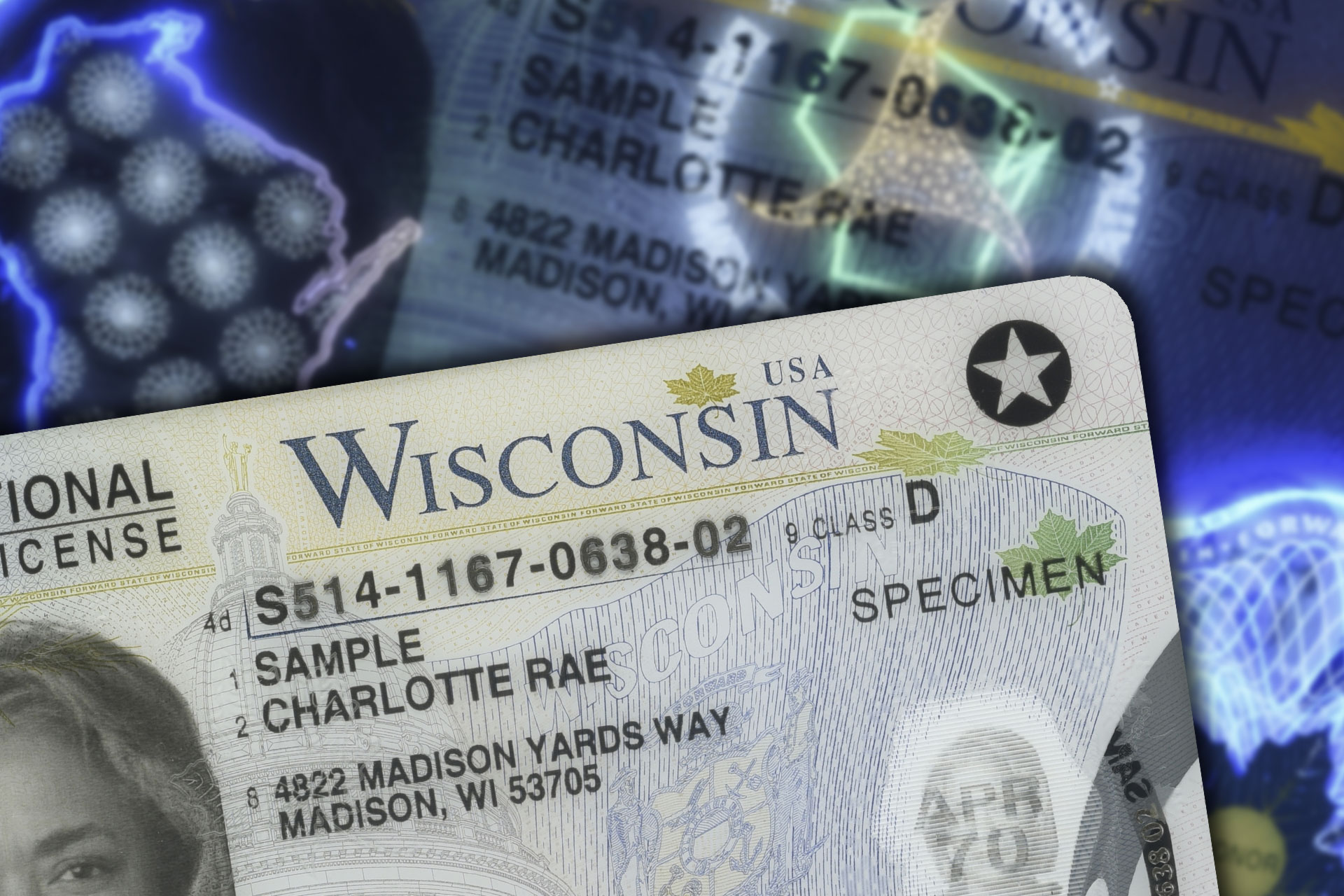
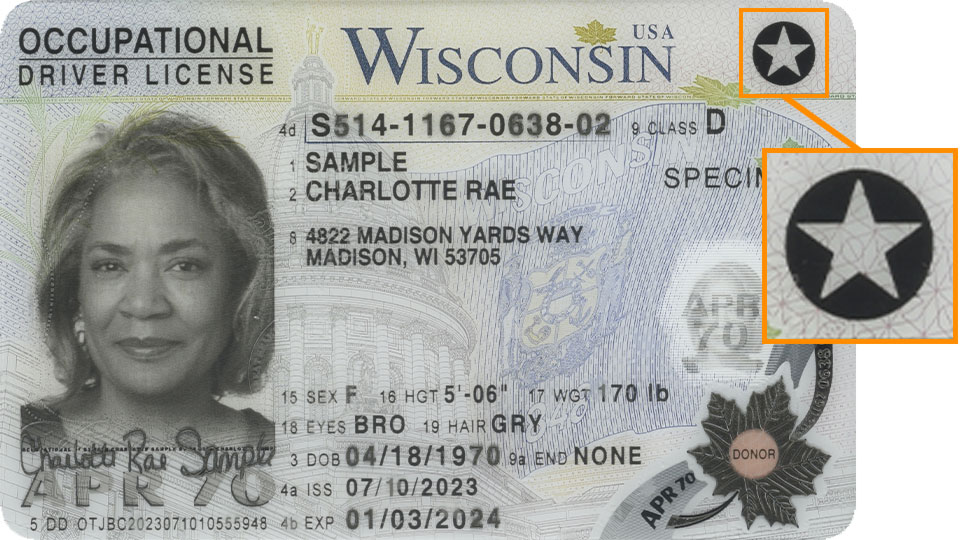
Depending on the issuing state, REAL ID-compliant driver´s licenses or ID documents can be identified by one of the golden or black REAL ID star markings at the top right of the document.
REAL ID star markings

REAL ID-compliant driver´s license with the star marking on the upper right
Are there alternatives to REAL ID-compliant documents?
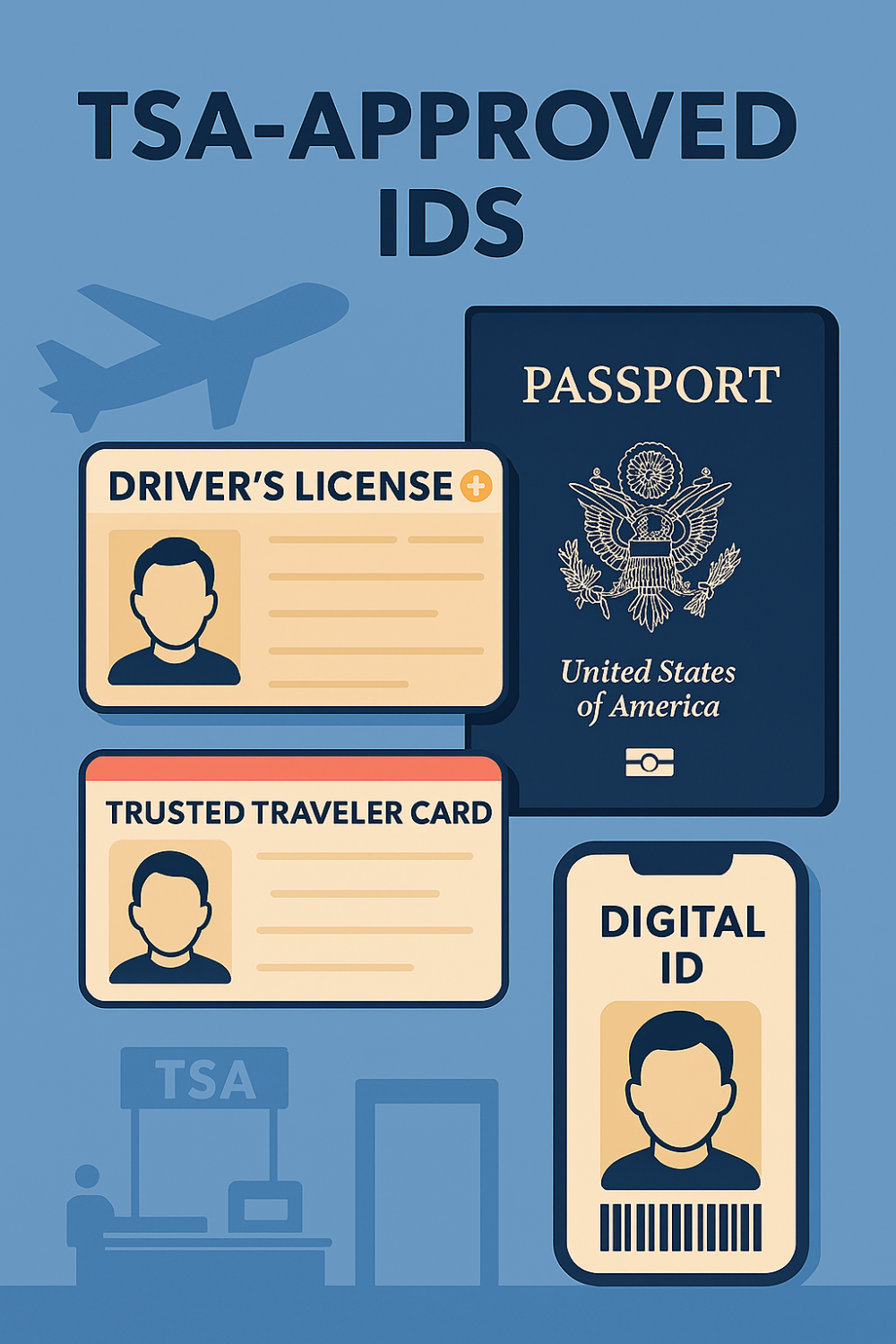
REAL ID-compliant US driver´s licenses are only one of many types of identification being accepted by the Transportation Security Administration (TSA) for domestic flights or when entering certain US Federal agencies.
Common REAL ID alternatives include:
- A valid U.S. passport or passport card
- Certain foreign passports with valid U.S. visas
- Trusted traveler program cards (where applicable)
- Other TSA‑approved identification documents
New starting in 2026:
Starting February 1, 2026, if travelers are unable to provide an acceptable form of ID at a TSA checkpoint, they will have the option to pay a $45 fee to use TSA ConfirmID. The fee covers a 10-day travel period, allowing round-trip or multiple flights within that window, and TSA advises passengers using ConfirmID to expect up to 30 minutes of additional processing time. This is a significant practical detail that travelers should now know about, and the article's conclusion section should be updated to reflect it.
As of March 2026:
Mobile Driver’s Licenses (mDL) & Mobile IDs (mID): The TSA accepts certain mDLs at over 250 participating airports.
Requirements: The mDL must be based on a REAL ID-compliant physical license or an Enhanced Driver’s License (EDL).
The issuing State must have a TSA waiver for federal use.
Approved States: Currently, TSA accepts mDLs from states including Arizona, California, Colorado, Georgia, Hawaii, Iowa, Louisiana, Maryland, New York, Ohio, and Utah. More states (like Illinois and Virginia) are frequently added to the list of approved digital IDs.
As of March 2026, digital passports (or "ID passes") are acceptable for domestic air travel at more than 250 participating TSA checkpoints. These are digital credentials derived from your physical U.S. passport and stored in your phone's digital wallet.
REAL ID as a crucial step towards enhanced security
The REAL ID Act represents an important step towards stronger identity security in the United States. Since May 7, 2025, travelers must ensure they carry a compliant form of identification when flying domestically or entering certain federal facilities. Whether you choose to apply for a REAL ID‑compliant driver’s license or rely on an alternative such as a passport, understanding the REAL ID requirements in advance will help you travel confidently, securely and without disruption.
References:
- https://www.usa.gov/real-id
- https://www.tsa.gov/realid/realid-faqs#
- https://www.tsa.gov/realid/are-you-realid-ready
- https://www.tsa.gov/travel/security-screening/identification
- https://15below.com/resources/blog/real-id-act
- https://www.usvisaservice.de/news/2023-einfuehrung-einheitlicher-ausweisstandards-usa/