Published:
Optical sapphire glass – scratch-resistant, clear, durable. For consistently precise scans.
Although best known as a gemstone, sapphire is also used today as a high-performance material. As well as natural sapphires, there are also synthetically produced ones. They are chemically identical and offer impressive extreme hardness, outstanding optical properties and high durability.
In high-intensity applications, such as ID card scanners, synthetic sapphire offers decisive advantages:
consistent material quality, high reliability and cost-effective production.

Maximum transparency and robustness for the DESKO PENTA Scanner® 4X
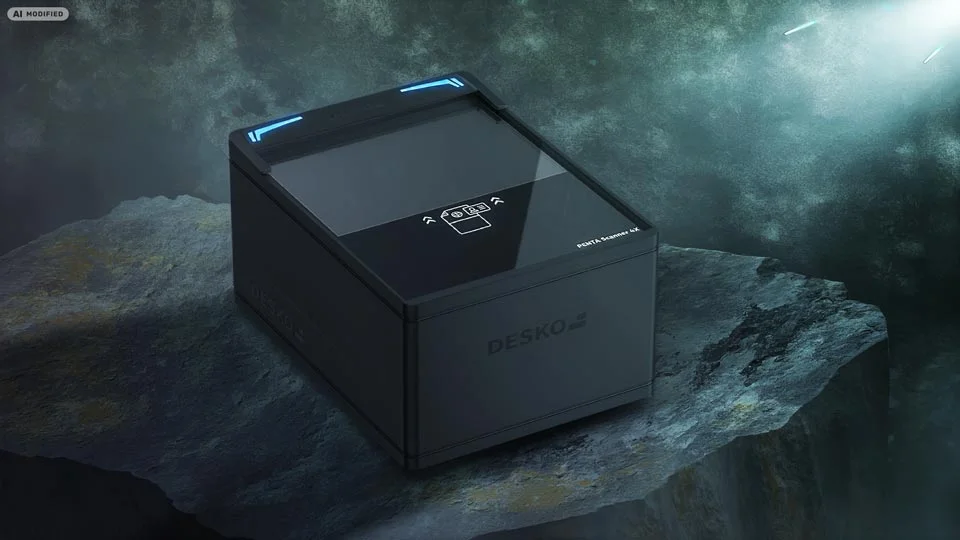
With a sapphire glass scanning surface, you can provide optimum protection for your device whilst achieving precise scan results. The material combines first-class optical quality with high durability and helps to maintain scanning performance in the long term, even with intensive use.
What are the advantages of sapphire crystal?

Scratch-resistant and durable
Sapphire glass has a Mohs hardness of 9, making it virtually scratch-proof (the second-hardest material after diamond). Even after thousands of scans, the surface remains clear and intact. This ensures consistently sharp images and extends the lifespan of the devices.

Maximum optical clarity
With a transmission of over 80 % in the 300 nm–5 µm range, sapphire glass allows both visible and infrared light to pass through with virtually no loss. This ensures perfect readability of ID data and security features under white, IR and UV light. Maximum scanning precision without optical distortion.

Durable and low-maintenance
Optical sapphire glass is chemically inert, so common cleaning agents and disinfectants cannot damage it. It can also withstand temperature fluctuations and extreme heat (>1500 °C). The robust surface can be cleaned frequently without any problems and without becoming cloudy or dull. This reduces maintenance requirements and downtime.

Reliable in continuous use
Thanks to its high mechanical strength (high flexural strength, abrasion resistance and compressive strength), the material remains stable even under continuous stress or in harsh environments. Whether at an airport check-in desk or at border control, sapphire glass enables reliable 24/7 operation.
These are the technical highlights
-
Spectral transmission
> 80 % (for wavelengths of 300 nm–5 µm)
-
Hardness
Mohs 9 – extremely scratch-resistant
-
Temperature resistance
> 1500 °C
-
Chemical resistance
Inert to acids and alkalis
-
Optical homogeneity
Δn ≤ 1×10^–6 (highest purity, no distortions)
Comparison – Results of the Vickers Hardness Test
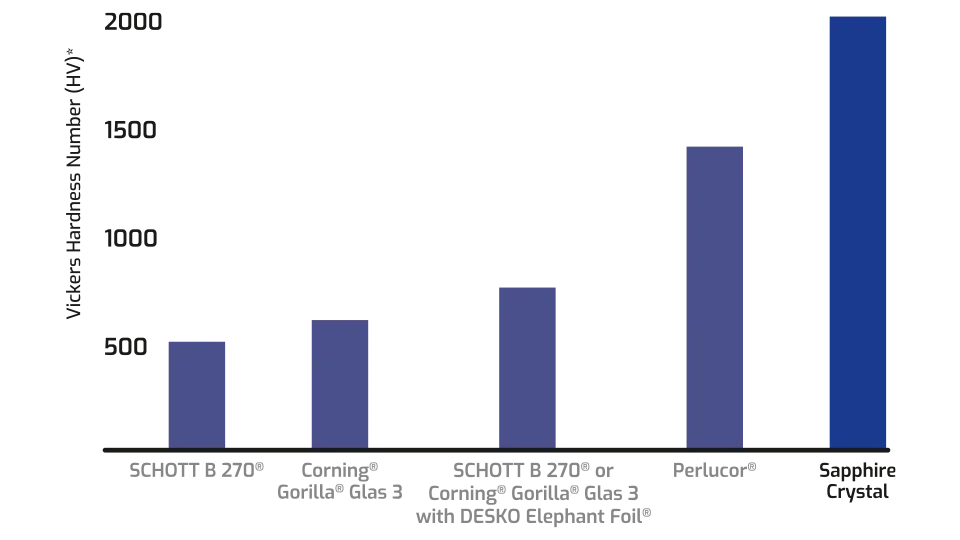
*The Vickers test is unique compared to other hardness testing techniques. Rather than using depth to determine hardness, it uses the surface area of the indentation. This method produces consistent results across all kinds of materials. HV = 1.8544 × F / d² is the Vickers hardness formula
Areas of application
Sapphire optical glass is ideally suited for passport and ID card scanners used in high-traffic environments:

Border controls and airports: Durable, scratch-resistant scanning surfaces enable daily passport checks without any loss of quality.

Public sector organisations: Robust document scanners with a durable glass surface – still as good as new even after years of daily use.
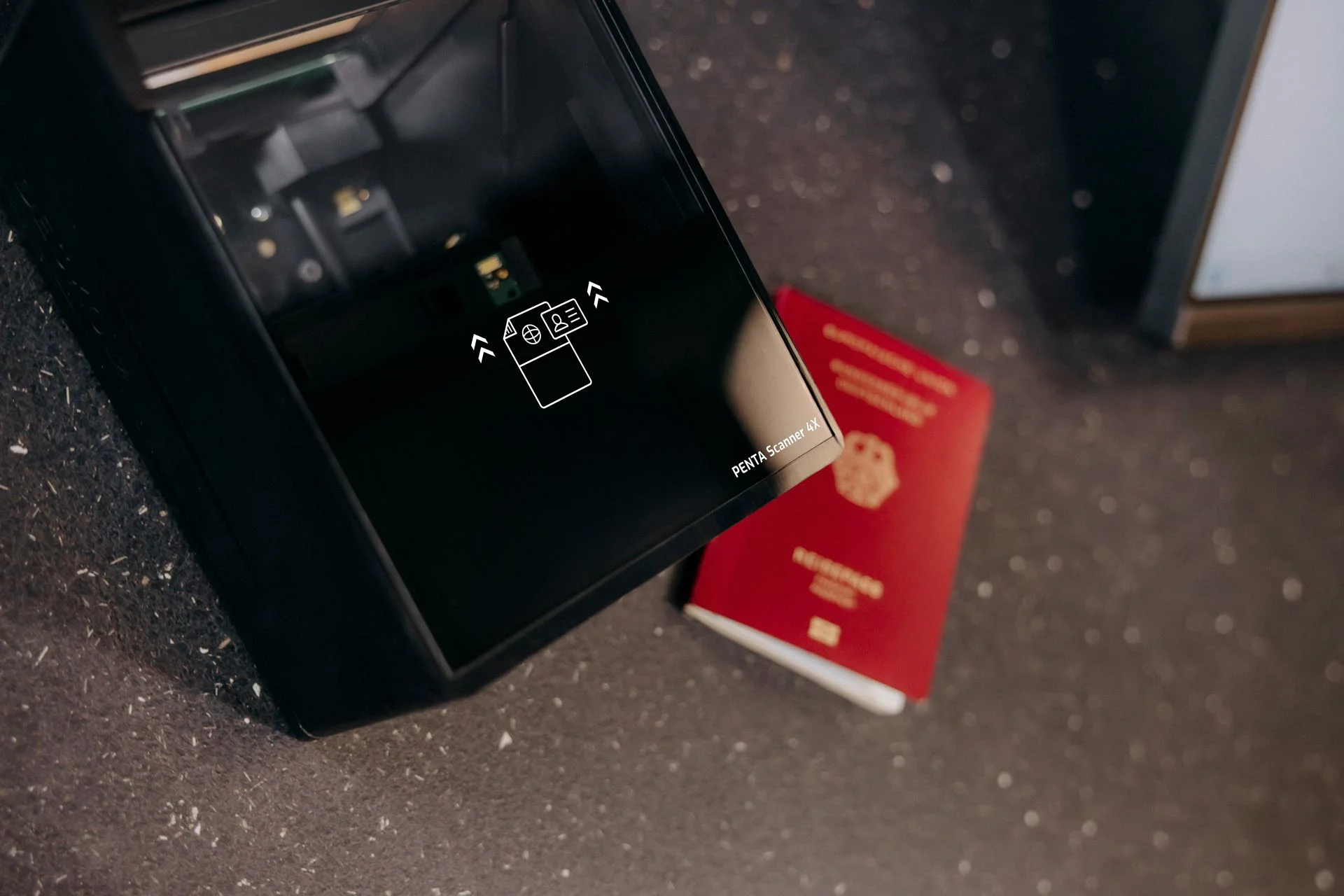
Uncompromising quality:
Fit your DESKO PENTA Scanner® 4X with optical sapphire glass. Benefit from clear scans, low maintenance and an extended service life for your device, even under the toughest conditions. Ensure reliability and precision whenever it matters most.
FAQ – An overview of the latest questions
-
What is Mohs?
The Mohs scale is used to indicate the hardness of minerals and gemstones. Hardness is rated on a scale from 1 (talc – soft) to 10 (diamond – hard). This scale is used to determine scratch resistance.
-
What is spectral transmission?
Spectral transmittance describes how much light of different wavelengths a material transmits.
This is crucial for scanners, as only light that is transmitted in sufficient quantities can be reliably detected by the sensor.
Optical-grade sapphire glass ensures a particularly high and uniform level of transmission, enabling all relevant light ranges to be utilised precisely and without distortion. -
What is optical homogeneity?
Optical homogeneity describes how uniformly a material affects light across its entire surface.
This is crucial for scanners, as only a uniform distribution of light results in clear and undistorted images.
Optical-grade sapphire glass ensures a particularly high degree of homogeneity, so that light passes through the glass to the sensor without interference or image artefacts. -
Why are temperature and chemical resistance important?
Temperature and chemical resistance describe how well a material retains its properties when exposed to heat and when in contact with environmental factors or chemicals.
This is important for scanners, as optical components are exposed to temperature fluctuations, cleaning and humidity in everyday use.
Optical-grade sapphire glass remains particularly stable and resilient in these conditions, ensuring that optical performance is maintained over the long term and the system operates reliably.
Sources:
Löslein Solutions GmbH
https://geowiki.geo.lmu.de/wiki
https://www.eureca.de/5045-0-Transmissions-Spektren.html
https://www.spektrum.de/lexikon/optik/optische-homogenitaet
https://escooptics.com/blogs/news/sapphire-optical-properties