Published:
Reduce Boarding Time at the Gate: Seven Operational and Technology Levers
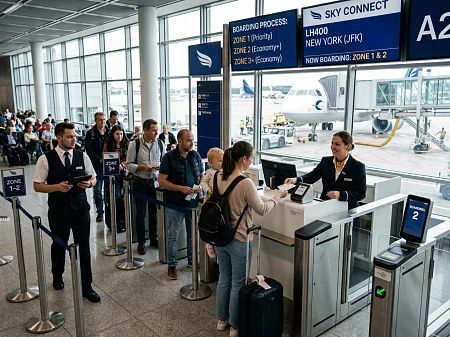
Boarding was called twenty minutes ago, and the cabin is still half empty. At the desk, one agent is explaining to a passenger that their group has not been called yet. The second agent is waiting while a passenger unlocks a phone and searches for the boarding pass. Behind them, the queue has stopped moving, and the turnaround clock keeps running.
Nobody did anything wrong here. Boarding is a chain of small steps, and each one can slow down the next. That is why there is no single fix. If you want to reduce boarding time, you have to look at the process and at the technology at the gate together.
Which levers are in the hands of the airline and the ground handler? Which depend on the gate hardware? And how do you know whether a change has worked?
Key takeaways
- Boarding time depends on process and technology. The reader is one lever, not the whole solution.
- Four operational levers: boarding sequence, staff deployment, communication and data.
- Three technology levers: mobile boarding passes that are ready to scan, reading at the first attempt, and clear go / no-go feedback.
- Measure before and after a change, with the same method each time.
Why every minute at the gate counts
Boarding is the last step of airport passenger processing before departure, and it can sit on the critical path of a turnaround. If boarding runs late, the door closes late, and a delay can travel through the rest of the day's rotation.
For the people at the gate, slow boarding has its own cost. Agents spend their time solving individual problems instead of keeping the flow going. Passengers stand longer in the queue and on the boarding bridge. And the overhead bins fill up in an order nobody planned.
None of the levers below comes with a guaranteed saving. The effect depends on the airport, the aircraft and the passengers, which is why measuring matters.
Operational levers to reduce boarding time
1. Boarding sequence and groups
The order in which passengers board affects how quickly the cabin fills. Boarding groups or zones, priority boarding and the handling of families and passengers who need assistance all play a role. Whatever the sequence, it only helps if it is enforced consistently at the gate. According to the IATA ITPS brief, the current IATA peripheral specifications include automated zone boarding on e-gates, so the gate itself can help enforce the sequence.
2. Staff deployment
Many questions can be answered before boarding starts: documents, cabin baggage, seat changes, special assistance. An agent who walks the queue before boarding opens can solve problems that would otherwise stop the line at the reader. During boarding, agents at the desk can then focus on exceptions.
3. Communication
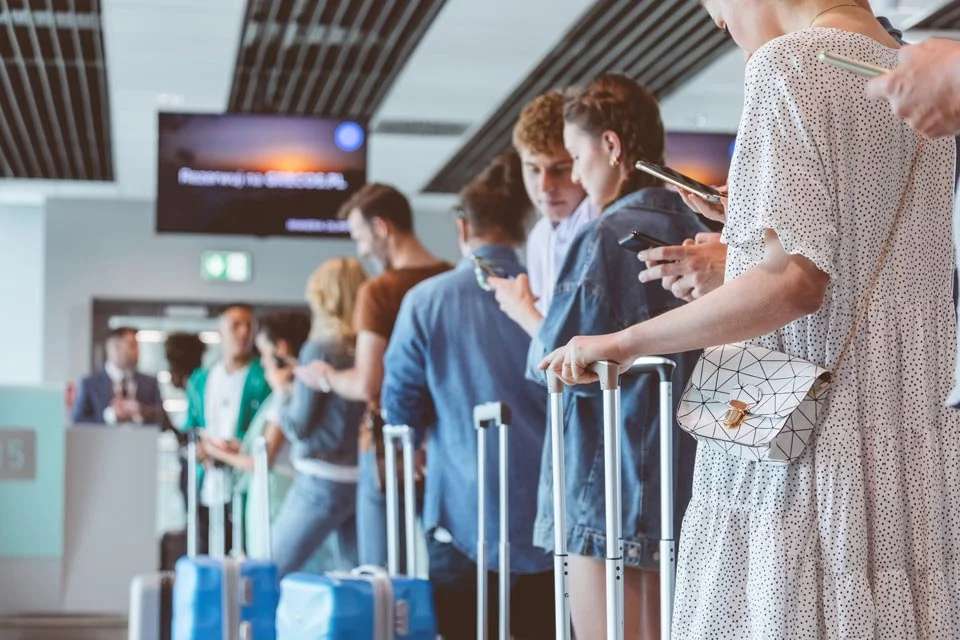
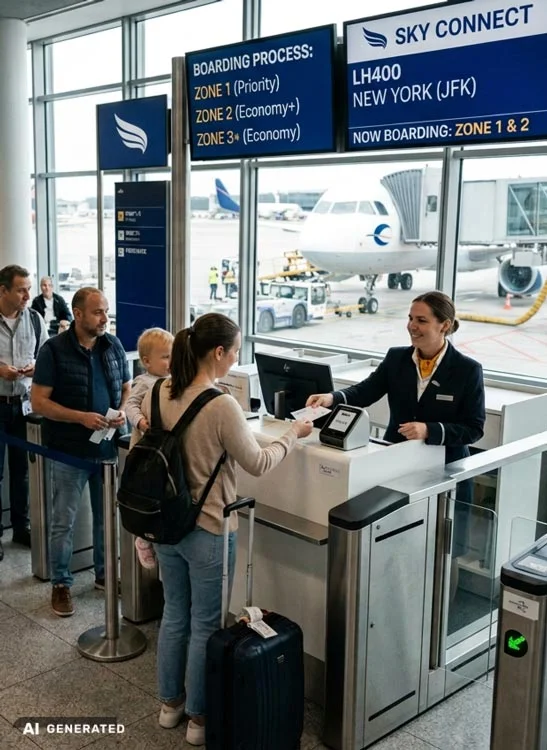
Clear announcements, screens in the waiting area and signage at the gate tell passengers what to do before they reach the reader: which group boards next, and that the boarding pass should be open on the phone. Passengers who know what to expect tend to move faster and ask fewer questions.
4. Data
Boarding produces data: When the first and last passenger scanned? How many passengers were rejected and why? How many passes needed a second try? Airlines and ground handlers that look at this data can see where their boarding actually loses time.
Technology levers at the gate
1. Mobile boarding passes that are ready to be scanned
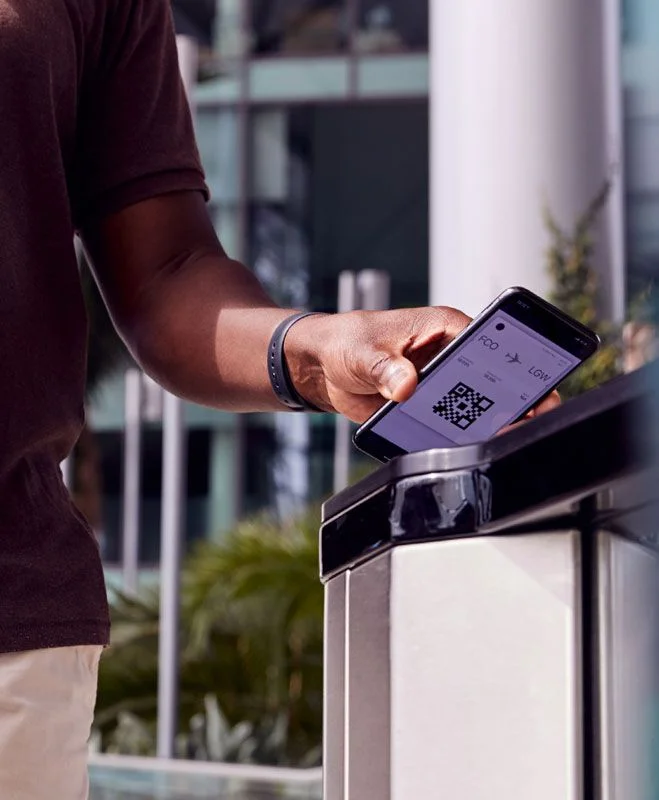
Mobile boarding passes remove the need to print, but they bring new delays: a locked phone, an app that has to load, a screen that is too dark. Reminders to open the boarding pass before the arriving the boarding gate reader, and readers that cope with phones, smartwatches and tablets, can reduce these pauses.
2. Reading at the first attempt
Every second try costs time, and a third try often brings an airport staff member to the reader. That is why the percentage of boarding passes that are read on the first attempt is generally more important than the maximum scan speed specified in the technical specifications. A large scan window and a large depth of field can make reading less dependent on how carefully a passenger presents the code. Test this with your passengers' real devices.
3. Clear go / no-go feedback
The go / no-go decision comes from the boarding application and the DCS; the boarding gate reader´s job is to show that result clearly. A passenger who does not understand the signal stops and looks around. Clear user feedback, visible and audible, tells the passenger whether to walk on or to try again, and it tells the agent who needs help. The display, the LEDs and the sound should work together and be easy to see from both sides.
Discover our DESKO BGR 504 pro boarding gate reader. Visit the product page.
The role of the first-scan read rate
Of the seven levers, the first scan is the one where the reader has the most direct influence. A failed read rarely stays a single event. The passenger tries again, the people behind wait, and an agent may have to step in and check the boarding pass manually. At a self-boarding gate, the people in the queue must wait until the problem is solved.
The first-scan read rate is therefore a good way to compare readers under the same conditions and to check an installation. It depends on more than the just the reader: the mix of paper and mobile boarding passes, the screens passengers use, the light at the gate and the position of the reader all play a role. Measure it at your own gates rather than relying on a figure from a datasheet.
How to measure boarding performance
You can only tell whether a lever works if you measure the same things before and after the change. Useful measures to evaluate the boarding process include:
| ✓ | Measure | What it shows |
|---|---|---|
| ☐ | Time from boarding start to last passenger scanned |
The total boarding duration at the gate. Some operators measure until the aircraft door closes. Whichever method you choose, use the same definition consistently.
|
| ☐ | Share of boarding passes read on the first try |
How reliably the reader and boarding passes work together. This can be measured through observation or gate application logs, if available.
|
| ☐ | Number of manual staff interventions |
How often the flow stops for individual problems.
|
| ☐ | Rejections and their reasons |
Whether problems originate from boarding passes, process or systems.
|
| ☐ | Passenger waiting time in the queue at peak moments |
How passengers experience the boarding process when the gate is busiest.
|
|
✓ |
Measure |
What it shows |
|
☐ |
Time from boarding start to last passenger scanned |
The total boarding duration at the gate. Some operators measure until the aircraft door closes. Whichever method you choose, use the same definition consistently. |
|
☐ |
Share of boarding passes read on the first try |
How reliably the reader and boarding passes work together. This can be measured through observation or gate application logs, if available. |
|
☐ |
Number of manual staff interventions |
How often the flow stops for individual problems. |
|
☐ |
Rejections and their reasons |
Whether problems originate from boarding passes, process or systems. |
|
☐ |
Passenger waiting time in the queue at peak moments |
How passengers experience the boarding process when the gate is busiest. |
Compare like with like: the same gate type, a similar load factor, the same aircraft size and a similar mix of paper and mobile boarding passes.
How to start: one gate, few changes at a time
Seven levers are too many to change at once, and if you change everything together, you will not know what worked. A simple approach:
- Pick one gate or one route with regular traffic and a stable aircraft type.
- Measure a baseline for a few weeks with the measures above.
- Change one or two levers, for example a pre-boarding check of documents and cabin baggage, or reminders to open the boarding pass before arriving at the boarding gate reader.
- Involve the agents. They know where boarding gets stuck, and they will have to work with the change every day.
- Compare and decide, then roll out what worked to further gates.
Technology changes, such as new readers, fit into the same pattern. Install them at one gate first, compare the first-scan read rate and the manual interventions with a similar gate, and use the result for the decision on the rest of the terminal.
Where the DESKO BGR 504 pro fits
Our boarding gate reader DESKO BGR 504 pro relates to the technology levers:
- Mobile boarding passes: reads 1D and 2D barcodes and QR codes from paper and the displays of smartphones, smartwatches and tablets, also contactless with the device held over the scan window.
- Scan window: an extra-large scan window (78.5 × 103 mm) with flatbed design and a large depth of field.
- Feedback: a large multi-colour display with a wide viewing angle that guides through the scan and shows status, results and individual graphics, plus multi-colour LEDs and a buzzer with adjustable volume.
- Installation: a flat design for counter and self-boarding applications.
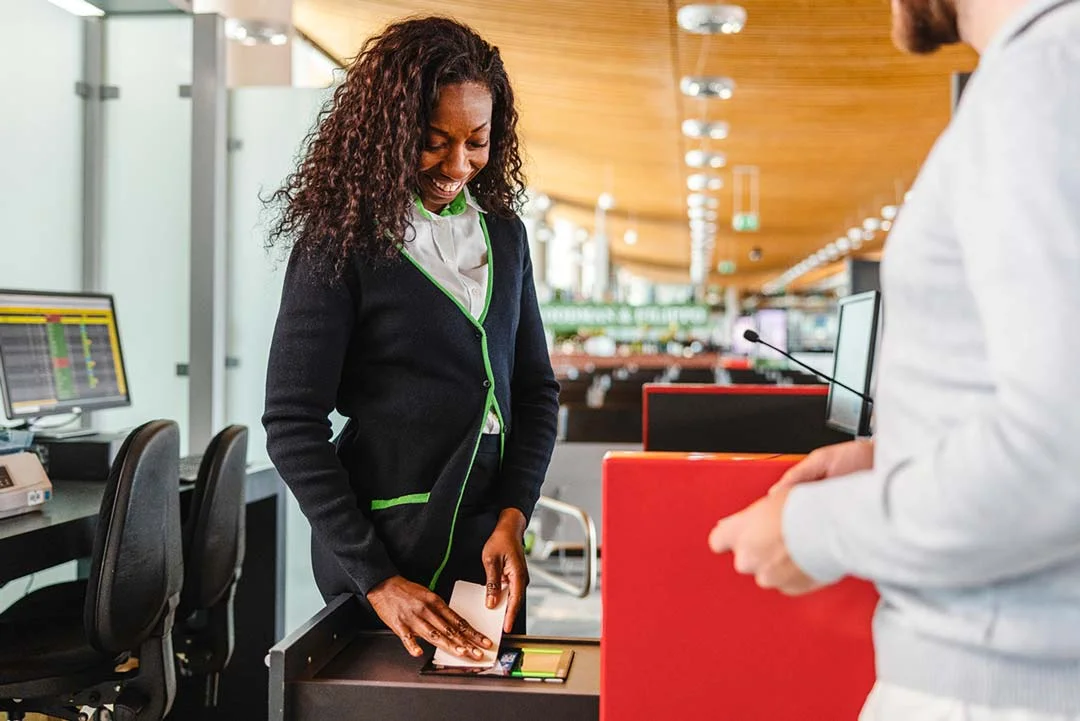
Improve the technology at your gates
Talk to DESKO about the ideal boarding gate reader for your gates.
Frequently Asked Questions
-
1. How can airlines reduce boarding time?
By working on the process and the technology together: a clear boarding sequence, staff who solve problems before boarding starts, good communication, data on where time is lost, mobile boarding passes that are ready to scan, readers that read at the first attempt and clear go / no-go feedback.
-
2. Which technology speeds up boarding?
Technology helps most where boarding stops: boarding passes that cannot be read at the first attempt, unclear user feedback and passengers who are not ready. Readers that handle paper and screens reliably and show a clear result address these points.
-
3. Does self-boarding reduce boarding time?
That depends on the process around it: the share of passengers who can use the gates, the fallback for those who cannot and how well the readers handle barcodes on paper and screens. Measure it at your own gates. The article on self-boarding gates explains how they work.
-
4. How is boarding time measured?
Typically as the time from boarding start to the last passenger scanned, together with supporting measures such as the first-scan read rate, manual interventions and rejection reasons. Use the same method before and after any change.